
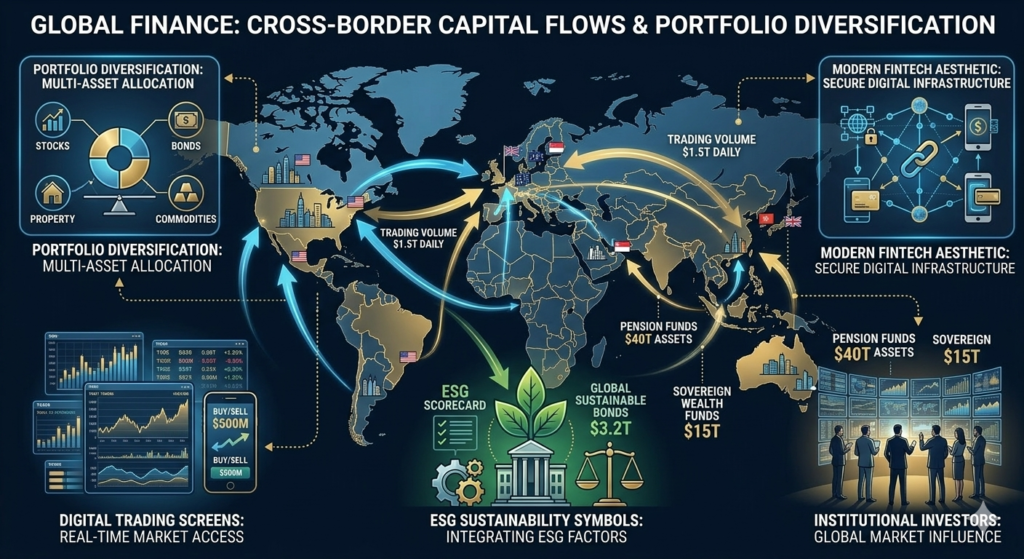
Introduction: Why Asset Management Matters Now More Than Ever
The global asset management industry is no longer a quiet backroom function of finance — it is the engine driving capital allocation across continents, shaping retirement futures, funding infrastructure, and increasingly, determining which companies survive the transition to a sustainable economy.
As of 2024, global assets under management (AUM) surpassed $120 trillion, according to data from the Boston Consulting Group’s Global Asset Management Report. This figure represents more than the combined GDP of every nation on earth — a staggering concentration of capital stewardship in the hands of a relatively small number of professional managers.
Yet with this power comes extraordinary responsibility. How these firms allocate capital, manage risk, fulfill their fiduciary duties, and respond to ESG imperatives defines not just investor returns — but the contours of the global economy itself.
This article explores the architecture of modern global asset management: who the key players are, what standards govern their operations, how portfolio diversification and ESG principles are being applied at scale, and what the future holds for an industry at the intersection of finance, technology, and sustainability.
Whether you are a CFA charterholder, a compliance officer, a family office advisor, or a sophisticated investor seeking to understand the landscape, this guide provides an authoritative, globally-oriented overview.
Section 1: Defining the Landscape — Key Terms and Concepts
What Is Asset Management?
Asset management refers to the professional administration of investments on behalf of clients — individuals, institutions, sovereign wealth funds, pension funds, endowments, and corporations. The asset manager acts as a steward of capital, constructing portfolios, managing risk, and generating returns aligned with the client’s objectives and time horizon.
It is distinct from wealth management, which typically includes broader financial planning services (tax, estate, insurance), though the two often overlap in practice at institutions serving ultra-high-net-worth clients.
Fiduciary Responsibility: The Cornerstone of Trust
Fiduciary responsibility is the legal and ethical obligation of an asset manager to act in the best interests of the client, placing the client’s interests above their own. Under global regulatory frameworks — including the U.S. Investment Advisers Act, the EU’s MiFID II directive, and the UK FCA’s Conduct of Business rules — fiduciaries are bound by:
- Duty of loyalty: Prioritizing client interests over personal gain
- Duty of care: Making investment decisions with skill, diligence, and prudence
- Duty of disclosure: Providing transparent, accurate reporting of fees, conflicts of interest, and performance
Portfolio Diversification: The First Principle of Risk Management
Portfolio diversification is the practice of allocating investments across a variety of asset classes, geographies, sectors, and instruments to reduce unsystematic risk. Grounded in Modern Portfolio Theory (MPT) — developed by Nobel laureate Harry Markowitz in 1952 — diversification remains the most empirically validated tool for managing investment risk without sacrificing expected return.
Global asset managers apply diversification across:
- Asset classes: Equities, fixed income, real assets, private equity, hedge strategies, cash
- Geographies: Developed markets (U.S., EU, Japan), emerging markets (China, India, Brazil), frontier markets
- Currencies: Hedged and unhedged foreign exchange exposures
- Time horizons: Short-duration bonds vs. long-dated infrastructure assets
- Sectors: Technology, healthcare, financials, energy, consumer staples
ESG Investing: From Niche to Mainstream
ESG investing — incorporating Environmental, Social, and Governance factors into investment analysis — has undergone a seismic shift from ethical preference to mainstream investment framework. The Principles for Responsible Investment (PRI), established under the auspices of the United Nations Environment Programme Finance Initiative (UNEP FI) in 2006, now counts over 5,000 signatories managing more than $120 trillion in assets.
ESG criteria allow investors to assess risks that traditional financial analysis may miss: climate transition risk, labor practices, board diversity, supply chain ethics, and regulatory exposure.
Section 2: The Global Players — Architecture of the Asset Management Industry
BlackRock: The Systemic Giant
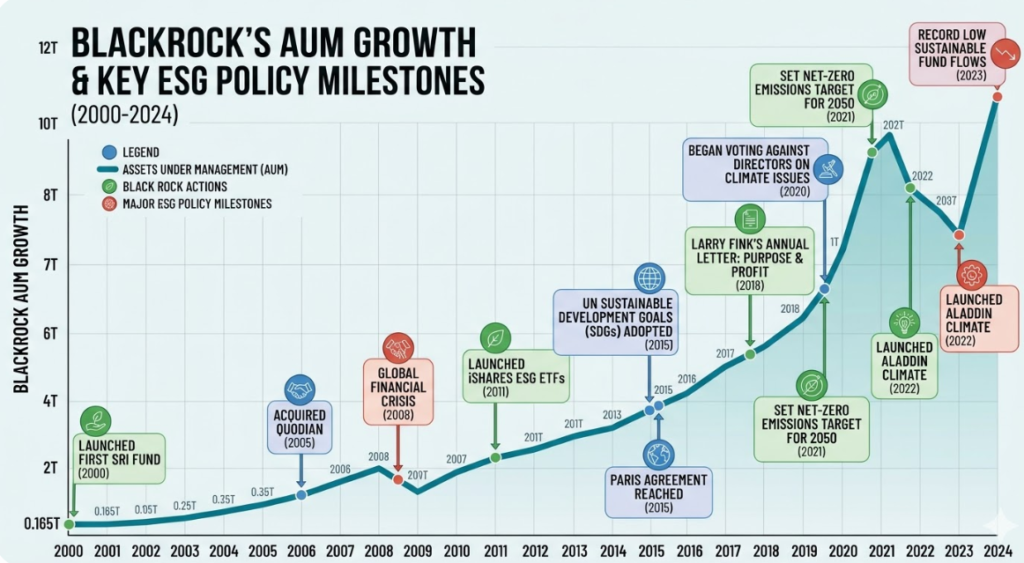
BlackRock, headquartered in New York and operating across 30+ countries, is the world’s largest asset manager with approximately $10 trillion in AUM as of 2024. Its scale makes it a systemic institution — changes in BlackRock’s investment policies ripple through global capital markets.
BlackRock’s Aladdin platform (Asset, Liability, Debt, and Derivative Investment Network) is perhaps the most sophisticated risk management operating system in the world, processing data on approximately $20 trillion in assets for clients across the industry. Aladdin is both a competitive advantage and a point of systemic concentration that regulators around the world monitor closely.
Key BlackRock Governance Principles:
- Investment stewardship program engaging thousands of companies on ESG-related governance issues annually
- Public disclosure of proxy voting records on environmental and social resolutions
- Signatory to the Task Force on Climate-related Financial Disclosures (TCFD) framework
- Active engagement on IFRS Sustainability Disclosure Standards (ISSB)
BlackRock’s AUM growth from 2000 to 2024, overlaid with key ESG policy milestones
Vanguard: The Democratizer of Investing
The Vanguard Group, founded by John C. Bogle in 1975, pioneered the low-cost index fund revolution and remains one of the most structurally unique firms in global finance. Owned by its own funds — which are in turn owned by their investors — Vanguard operates without external shareholders seeking profit extraction, creating a structural alignment of interests rarely seen in financial services.
With approximately $8.6 trillion in AUM, Vanguard has been instrumental in:
- Driving fee compression across the asset management industry globally
- Mainstreaming passive investing through index funds and ETFs
- Developing voting and engagement policies through its Investment Stewardship program
Vanguard’s model has influenced regulatory thinking globally, particularly around fund fee transparency under frameworks like the EU’s Key Information Document (KID) requirements under PRIIPs regulation.
Fidelity Investments: Private, Diversified, Global
Fidelity Investments, still privately held and headquartered in Boston, manages approximately $4.9 trillion in discretionary AUM and provides platform services for trillions more. Its diversity — spanning mutual funds, workplace retirement services, brokerage, institutional asset management, and digital assets — makes it one of the most operationally complex asset management businesses in the world.
Fidelity’s global expansion includes significant operations in Canada, the UK, Germany, Japan, Hong Kong, and Australia, giving it genuine multi-jurisdictional regulatory expertise. Its early move into digital assets through Fidelity Digital Assets (now rebranded as Fidelity Crypto) positioned it as one of the few incumbent managers to build genuine institutional-grade cryptocurrency custody and trading infrastructure.
Other Major Global Managers: A Broader Ecosystem
The asset management landscape extends well beyond these three giants:
| Firm | AUM (approx.) | Key Specialization |
| State Street Global Advisors | ~$4.1T | ETFs (SPDR), ESG stewardship |
| J.P. Morgan Asset Management | ~$3.5T | Multi-asset, alternatives |
| Amundi (Paris) | ~$2.2T | European fixed income, EM |
| PIMCO | ~$1.8T | Fixed income, macroeconomic strategy |
| Schroders (London) | ~$0.9T | Active management, private assets |
| Norges Bank Investment Mgmt | ~$1.7T | Sovereign wealth, ESG leadership |
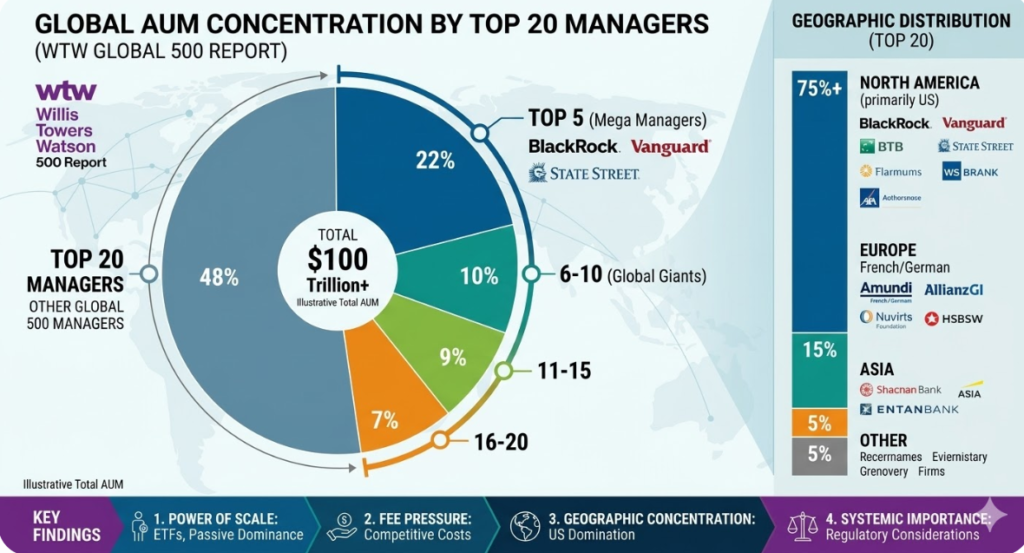
Global AUM concentration by top 20 managers — source: Willis Towers Watson Global 500 Report
Section 3: Portfolio Diversification in Practice — Global Standards and Approaches
The Efficient Frontier in a Multi-Asset World
The efficient frontier — the set of optimal portfolios offering maximum expected return for a given level of risk — is the conceptual framework underlying institutional portfolio construction. Modern institutional managers go beyond the original Markowitz binary of equities and bonds to construct portfolios spanning:
- Alternative investments: Infrastructure, private equity, real estate, commodities, hedge funds
- Illiquidity premiums: Long-term investors (pension funds, sovereign wealth funds) systematically harvest returns from illiquid assets that shorter-horizon investors cannot hold
- Factor exposures: Smart beta and factor investing (value, momentum, quality, low volatility) have become standard tools, blending active and passive approaches
Geographic Diversification: Navigating Developed and Emerging Markets
Global asset managers must navigate dramatically different regulatory, economic, and currency environments. The IMF’s World Economic Outlook and World Bank data consistently inform top-down allocation decisions across:
- Developed Markets (DM): U.S., Eurozone, Japan, UK, Australia — deeper liquidity, stronger rule of law, lower political risk
- Emerging Markets (EM): China, India, Brazil, South Africa, Indonesia — higher growth potential, higher volatility, currency risk, governance variability
- Frontier Markets: Vietnam, Nigeria, Bangladesh — early-stage capital markets, high risk/high opportunity
The MSCI Emerging Markets Index and FTSE Russell’s country classification serve as global standards for defining EM/DM/FM boundaries and drive trillions in passive allocation decisions.
Liability-Driven Investing (LDI): The Institutional Standard
For pension funds and insurance companies managing long-duration liabilities, Liability-Driven Investing (LDI) has become the global standard for portfolio construction. Rather than maximizing absolute return, LDI aligns asset duration and cash flows with the timing of obligations.
The 2022 UK gilt crisis — triggered in part by LDI strategies that used leveraged gilt positions as liability hedges — became a landmark case study in the systemic risks of widespread adoption of similar strategies. The episode prompted regulatory reviews by the Financial Conduct Authority (FCA), the Bank of England, and international bodies including the Financial Stability Board (FSB), leading to enhanced liquidity stress testing requirements for LDI funds globally.
“The lesson from the 2022 LDI crisis is that diversification must account not just for return correlation but for liquidity correlation — particularly during market stress events.”
— Risk Management Symposium, Geneva
Section 4: ESG Investing — Global Standards, Frameworks, and Integration
The Global ESG Architecture
ESG investing does not operate in a regulatory vacuum. A sophisticated architecture of international standards and frameworks governs how asset managers integrate, disclose, and report on ESG factors:
Key International Frameworks:
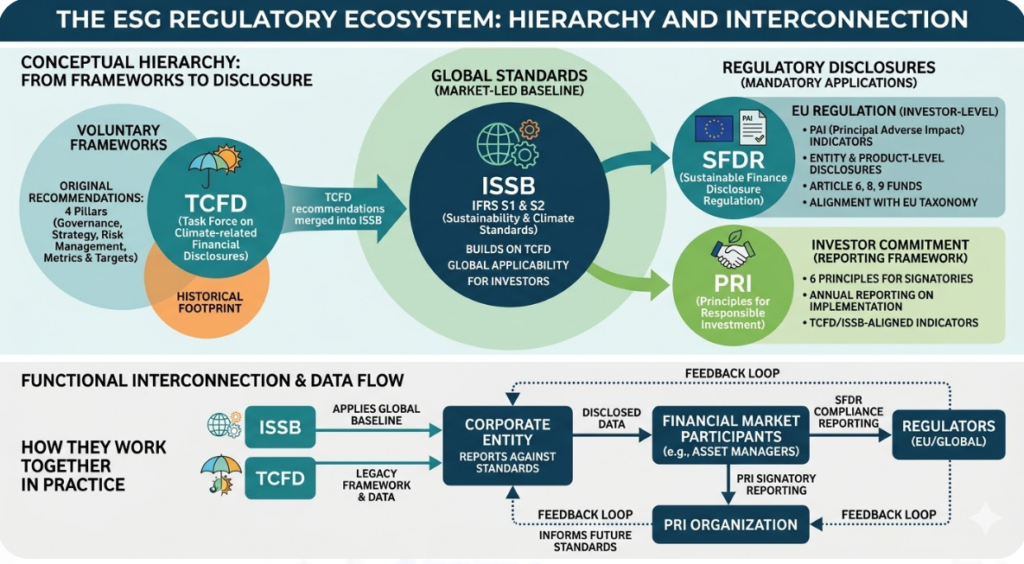
- TCFD (Task Force on Climate-related Financial Disclosures): Developed under the FSB, now integrated into regulatory reporting in the UK, EU, New Zealand, Switzerland, and Singapore
- ISSB (International Sustainability Standards Board): Launched by the IFRS Foundation in 2021; its standards (IFRS S1, IFRS S2) are rapidly becoming the global baseline for sustainability disclosure
- EU Sustainable Finance Disclosure Regulation (SFDR): Classifies investment products into Article 6, 8, and 9 categories based on ESG integration and impact objectives
- UN PRI (Principles for Responsible Investment): Voluntary framework with over 5,000 signatories committed to incorporating ESG into investment practice
- GRI (Global Reporting Initiative): Sets standards for corporate sustainability reporting that asset managers use in their ESG analysis
The ESG Regulatory Ecosystem — TCFD → ISSB → SFDR → PRI, showing the hierarchy and interconnection
From Exclusion to Integration: The Evolution of ESG Strategy
ESG investing has evolved through distinct phases:
- Exclusion/Negative Screening (1980s–2000s): Avoiding sectors — tobacco, weapons, gambling — for ethical reasons
- ESG Integration (2000s–2015): Incorporating ESG data as additional inputs into fundamental financial analysis
- Active Ownership/Stewardship (2010s–present): Using shareholder voting and engagement to influence corporate behavior
- Impact Investing (2015–present): Seeking measurable positive social/environmental outcomes alongside financial returns
- Systemic Stewardship (emerging): Addressing system-level risks — climate change, inequality — that affect all portfolios
Case Study: Norges Bank Investment Management (NBIM) — The ESG Pioneer
Norway’s Government Pension Fund Global (GPFG), managed by NBIM, is the world’s largest sovereign wealth fund at approximately $1.7 trillion. It is widely regarded as the global gold standard for responsible investment.
NBIM’s ESG approach includes:
- Exclusions: Comprehensive ethics-based exclusion list covering companies involved in coal production, certain weapons, tobacco, and companies with serious ESG violations
- Active Ownership: Engagement with thousands of portfolio companies annually, with public disclosure of voting records
- Climate Strategy: Ambitious targets for divesting from fossil fuel companies without credible transition plans
- Transparency: One of the most transparent sovereign investors globally, publishing detailed annual reports on responsible investment
NBIM’s approach has influenced regulatory design in multiple jurisdictions and serves as a benchmark for institutional ESG integration worldwide.
The Greenwashing Problem: Regulatory Response
As ESG fund launches surged, so did concerns about greenwashing — the misleading representation of investment products as more sustainable than they are. Regulatory responses have been swift:
- SEC (U.S.): Enhanced disclosure requirements under the “Names Rule” amendment; enforcement actions against managers making misleading ESG claims
- FCA (UK): Sustainable Disclosure Requirements (SDR) and investment labels regime (Sustainable Focus, Sustainable Improvers, Sustainable Impact)
- EU SFDR: Revised regulatory technical standards (RTS) requiring detailed disclosure of ESG claims at product level
Section 5: Regulatory Frameworks and Global Governance Standards
Basel Framework: The Foundation of Financial Risk Management
While the Basel Committee on Banking Supervision (BCBS) primarily regulates banks, its frameworks for risk management, capital adequacy, and governance have shaped institutional investment management globally. The Basel III framework — including requirements for liquidity coverage ratios and net stable funding ratios — directly affects how bank-affiliated asset managers operate and how fixed income portfolios are constructed.
Basel IV (now being implemented) introduces further refinements to credit risk modeling that will affect corporate bond portfolio management globally.
IOSCO: The Global Securities Regulator Network
The International Organization of Securities Commissions (IOSCO) sets international standards for securities regulation, including asset management. Its principles cover:
- Licensing and registration of investment managers
- Conduct of business standards
- Disclosure and transparency requirements
- Cross-border regulatory cooperation
IOSCO’s work on crypto-asset regulation and sustainability disclosure is increasingly central to global asset management governance.
MiFID II and the European Framework
The EU’s Markets in Financial Instruments Directive II (MiFID II) — one of the most comprehensive regulatory overhauls in global financial history — established detailed requirements for:
- Best execution standards
- Product governance and suitability
- Cost and charges disclosure (the “50 basis point total cost” benchmark)
- Research unbundling (separation of research costs from trading commissions)
- Conflicts of interest management
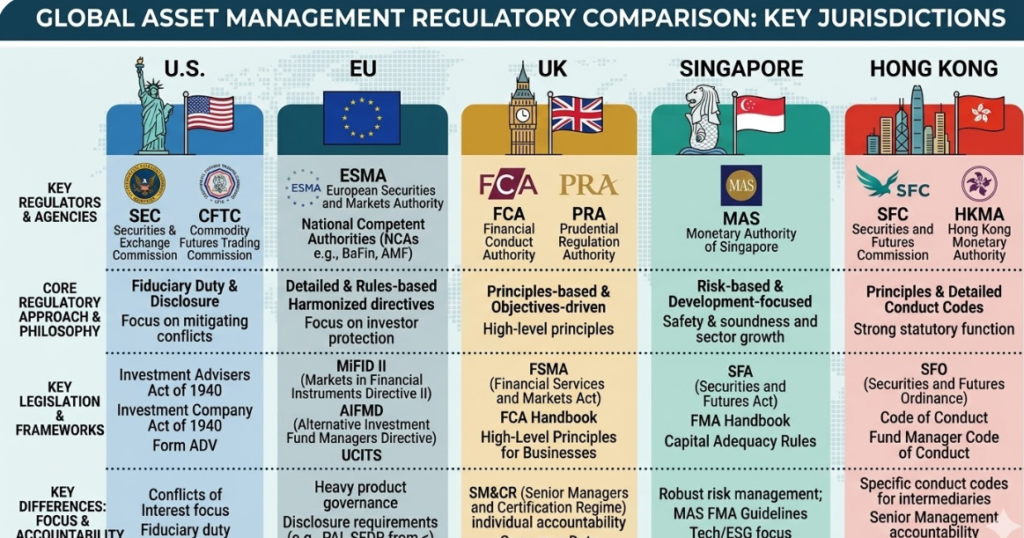
MiFID II has influenced regulatory design in jurisdictions from Hong Kong (SFC) to Australia (ASIC) to the UAE (DFSA), making it arguably the most globally influential securities regulation of the past decade.
Comparison of key asset management regulatory regimes — U.S. (SEC/CFTC), EU (ESMA/MiFID II), UK (FCA), Singapore (MAS), Hong Kong (SFC)
Section 6: Digital Transformation in Asset Management
Technology as Competitive Advantage
Digital transformation is reshaping every dimension of asset management, from front-office investment decision-making to middle-office risk management and back-office operations:
Key Technology Trends:
- Artificial Intelligence and Machine Learning: Natural language processing for earnings call analysis, machine learning for factor model enhancement, generative AI for client reporting
- Alternative Data: Satellite imagery, credit card transaction data, web scraping, geolocation data — used to gain informational edges in fundamental research
- Cloud Infrastructure: Migration to AWS, Azure, and GCP enabling scalable, cost-efficient operations
- Blockchain/DLT: Tokenization of real assets, streamlined settlement, and smart contract-based fund administration
- RegTech: Automated compliance monitoring, real-time regulatory reporting, sanctions screening
Case Study: BlackRock’s Aladdin — Risk at Scale
BlackRock’s Aladdin risk management platform exemplifies the technology-as-moat strategy. Originally developed for internal risk management, Aladdin is now licensed to external asset managers, insurance companies, and pension funds, creating a network effect that deepens BlackRock’s competitive position with each additional client.
The platform processes approximately 250 million portfolio calculations per week, stress-testing portfolios against thousands of scenarios in real time. Its scale has created a systemic question that regulators — including the Financial Stability Board — have publicly examined: what happens to global financial stability if Aladdin experiences an outage or a systematic error in its risk models?
FinTech Disruption: Democratizing Asset Management
The rise of FinTech has democratized asset management in ways that were unimaginable a decade ago:
- Robo-advisors (Betterment, Wealthfront, Nutmeg): Algorithmic, low-cost portfolio management accessible to retail investors with minimal minimums
- Digital Platforms (Interactive Brokers, Robinhood, Freetrade): Fractional share investing making global diversification accessible at micro-scale
- Tokenized Assets: Platforms like Securitize and Arca Labs enabling fractional ownership of private equity, real estate, and fixed income
- M-Pesa Model Applied to Investment: Mobile-first investment platforms in emerging markets (e.g., M-Shwari in Kenya, Cowrywise in Nigeria) bringing asset management to unbanked populations
“The next billion investors won’t come through a private bank branch — they’ll come through a smartphone. The wealth management industry must build for that reality.”
— FinTech Innovation Summit, Singapore
Section 7: Operational Excellence and Best Practices
Investment Process: From Mandate to Portfolio
World-class asset managers operate disciplined, repeatable investment processes:
- Investment Mandate Definition: Clear articulation of return objectives, risk tolerance, constraints (ESG, liquidity, currency hedging), and benchmark
- Asset Allocation: Strategic (long-term, policy) and tactical (short-term, opportunistic) allocation decisions, typically governed by an Investment Policy Statement (IPS)
- Security Selection: Fundamental analysis, quantitative screening, ESG scoring — applied within each asset class sleeve
- Portfolio Construction: Factor exposure management, diversification optimization, transaction cost minimization
- Risk Management: Ongoing monitoring of market risk (VaR, CVaR), liquidity risk, counterparty risk, and operational risk
- Performance Attribution: Understanding the sources of return — benchmark allocation, security selection, factor tilts, currency effects
- Client Reporting: Transparent, timely, and comprehensive reporting against agreed benchmarks and objectives
Governance Structures: Investment Committees and Oversight
Leading firms invest heavily in governance architecture:
- Investment Committees: Typically comprising senior portfolio managers, chief investment officer, risk officers, and increasingly ESG specialists
- Risk Committees: Independent of portfolio management, providing challenge and oversight
- Compliance and Legal: Ensuring regulatory compliance across all jurisdictions of operation
- Board-Level Oversight: Independent directors with fiduciary responsibility for fund oversight (required under UCITS, SEC Investment Company Act, and equivalent frameworks)
Performance Measurement: The Global Investment Performance Standards (GIPS)
The Global Investment Performance Standards (GIPS), developed and maintained by the CFA Institute, are the globally recognized voluntary standards for the calculation and presentation of investment performance. GIPS compliance has become a de facto requirement for institutional asset managers seeking credibility with sophisticated investors worldwide.
GIPS 2020 enhanced requirements include:
- Standards for alternative investment performance presentation
- Requirements for GIPS composite and pooled fund reports
- Enhanced standards for overlay and portable alpha strategies
- Expanded guidance for money-weighted return calculation
Section 8: Case Studies in Global Asset Management Excellence
Case Study 1: The Norway Model — Long-Term, Responsible, Transparent
The Government Pension Fund Global of Norway is managed with an explicit mandate to maximize long-term returns for future generations while maintaining the highest standards of responsible investment. Its governance model — with clearly defined roles for the Ministry of Finance (owner), the Norges Bank Board (oversight), and NBIM (management) — is cited by the IMF and World Bank as a model for sovereign wealth fund governance.
Key lessons from the Norway Model:
- Long investment horizon enables genuine illiquidity premium harvesting
- Transparency builds public legitimacy for market risk-taking
- ESG exclusions and engagement can coexist with competitive financial returns
- Clear separation between political ownership and professional management is essential
Case Study 2: The Rothschild Approach — Discretionary Multi-Family Office
Rothschild & Co Wealth Management epitomizes the multi-generational, relationship-driven approach to managing ultra-high-net-worth capital. With a heritage spanning over 200 years, it has built expertise in:
- Concentrated equity risk management: Helping founding families diversify single-stock concentration without triggering excessive taxation
- Illiquid alternatives access: Providing clients with access to private equity, private credit, and real assets that require long lock-up periods
- Multi-jurisdictional planning: Cross-border estate, succession, and philanthropic planning across dozens of legal jurisdictions
The firm’s model contrasts sharply with the asset-gathering, AUM-maximizing approach of the mega-managers — prioritizing client depth over scale.
Case Study 3: Amundi’s Emerging Market Strategy
Amundi, Europe’s largest asset manager, has built a distinctive position in emerging market and sustainable investing. Its partnership with the International Finance Corporation (IFC) — the private sector arm of the World Bank Group — to create the Amundi Planet Emerging Green One (EGO) fund demonstrated how institutional asset management can be mobilized for development finance objectives.
The EGO fund — raising over €1.4 billion — invested in green bonds issued by emerging market banks, with the IFC providing first-loss protection to de-risk the portfolio for institutional investors. This blended finance structure has become a model for channeling private capital to emerging market climate infrastructure.
Section 9: The Future of Global Asset Management
Artificial Intelligence: Beyond Efficiency to Investment Alpha
AI’s role in asset management is evolving rapidly beyond back-office automation:
- Large Language Models (LLMs): Processing unstructured text (earnings calls, regulatory filings, social media) at scale to generate investment insights
- Reinforcement Learning: Dynamic portfolio rebalancing algorithms that adapt to changing market regimes
- Explainable AI (XAI): Growing regulatory demand (particularly in the EU under GDPR’s “right to explanation”) for transparent AI-driven investment decisions
- Generative AI in Client Communication: Personalized, at-scale client reporting and financial planning
However, AI adoption also introduces new risks: model risk, data quality risk, algorithmic bias, and cybersecurity exposure — all areas of active regulatory attention globally.
Digital Assets: The Emerging Institutional Frontier
The gradual institutionalization of digital assets — cryptocurrencies, tokenized securities, and DeFi protocols — represents both an opportunity and a governance challenge for global asset managers:
- Bitcoin and Ethereum ETFs: Approved in the U.S. in 2024, bringing digital assets into mainstream portfolio construction for institutional investors
- Tokenization of Real-World Assets (RWA): BlackRock’s BUIDL fund (tokenized money market fund on Ethereum) and Franklin Templeton’s BENJI platform signal the direction of travel
- Central Bank Digital Currencies (CBDCs): The BIS reports over 130 countries exploring CBDCs, which will fundamentally reshape cash management and fixed income portfolio construction
Sustainable Finance: From ESG to Systems-Level Change
The next evolution of sustainable finance moves beyond individual company ESG scores to address system-level risks:
- Just Transition: Ensuring the shift to net-zero carbon doesn’t exacerbate social inequality — increasingly a formal investment consideration under PRI’s stewardship blueprint
- Biodiversity and Natural Capital: The Taskforce on Nature-related Financial Disclosures (TNFD) framework — mirroring TCFD for nature — is rapidly becoming a regulatory expectation
- Social Equity Finance: Integrating racial equity, gender-lens investing, and access to financial services into portfolio construction and engagement strategies
Conclusion: The New Architecture of Global Asset Management
The global asset management industry stands at an inflection point. The convergence of scale concentration (a handful of firms managing GDP-scale AUM), ESG mainstreaming, digital transformation, and regulatory sophistication is reshaping every dimension of how capital is stewarded.
Key Takeaways for Financial Professionals
- Fiduciary standards are converging globally: While jurisdictional differences remain, the direction of travel — toward higher transparency, lower conflicts of interest, and greater accountability — is universal
- ESG is not optional: From regulatory requirements (SFDR, SDR) to investor demand to risk management necessity, ESG integration is no longer a differentiator but a baseline expectation
- Technology is both enabler and risk: AI, alternative data, and digital assets offer genuine competitive advantages — but introduce new dimensions of operational, regulatory, and systemic risk
- Diversification must be genuinely global: Single-region concentration is increasingly a governance failure, not just an investment suboptimality
- Long-term thinking creates durable value: The Norway Model, the endowment model, and the best-in-class family office approaches all demonstrate that patient, well-governed capital outperforms over time
Actionable Insights for Asset Managers
- Audit your ESG integration: Are you at Article 8/9 standard under SFDR? Do you have a credible TCFD disclosure? If not, regulatory and client pressure will force the issue
- Invest in technology governance: AI and alternative data strategies require robust model risk management frameworks — establish them proactively
- Deepen your fiduciary documentation: Investment Policy Statements, conflict of interest registers, and proxy voting policies should be living, actively maintained documents
- Benchmark to GIPS: For any manager seeking institutional mandates, GIPS compliance is increasingly a table-stakes requirement
- Engage with international standards bodies: The ISSB, IOSCO, FSB, and TCFD are setting the rules that will govern your business — participation in consultation processes matters
Frequently Asked Questions (FAQ)
Q1: What is the difference between asset management and wealth management?
Asset management focuses on the professional investment of client capital — constructing and managing portfolios of securities, alternatives, and other financial instruments. Wealth management is a broader service encompassing asset management alongside financial planning, tax optimization, estate planning, insurance, and philanthropy advice. Large global firms like Goldman Sachs, UBS, and Morgan Stanley offer both under integrated wealth and investment management platforms.
Q2: How do ESG factors affect investment returns?
The evidence on ESG and returns is nuanced. Long-term studies — including meta-analyses of over 2,000 academic papers by Deutsche Asset Management and the University of Hamburg — suggest ESG integration is associated with positive or neutral financial performance in the majority of cases, particularly over longer time horizons. However, short-term performance can diverge significantly — the energy sector’s strong performance in 2022 penalized portfolios with low fossil fuel exposure. Most institutional managers position ESG integration as a risk management tool rather than a pure return enhancer.
Q3: What credentials should I look for in a global asset manager?
When evaluating an asset manager’s credentials, look for:
- Regulatory authorization: Licensed by relevant authorities (SEC, FCA, ESMA, MAS, ASIC)
- GIPS compliance: Independently verified investment performance calculations
- CFA Charterholders: The Chartered Financial Analyst (CFA) designation is the global gold standard for investment management professionals
- PRI signatory: Commitment to responsible investment principles
- ISO 22301/31000: Business continuity and risk management certifications
- Transparent fee structures: Total Expense Ratios (TERs) clearly disclosed under relevant local regulatory requirements
Suggested Internal and External Links
External Resources:
- Basel Committee on Banking Supervision — Key regulatory publications on financial risk management
- IMF World Economic Outlook — Global economic context for asset allocation
- UN PRI Framework — Responsible investment principles and signatories
- TCFD Recommendations — Climate-related financial disclosure standards
- GIPS Standards — Global investment performance standards
- IOSCO Principles — International securities regulation standards
- Willis Towers Watson Global 500 Report — Annual ranking of world’s largest asset managers